Human Trafficking: A Hidden Crisis We Cannot Ignore
Blog post description: Human trafficking affects millions worldwide, and it happens here in the U.S. Learn how traffickers operate, who is at risk, and how we can respond as a community to protect the vulnerable and bring hope, justice, and restoration to survivors.
4/20/20263 min read
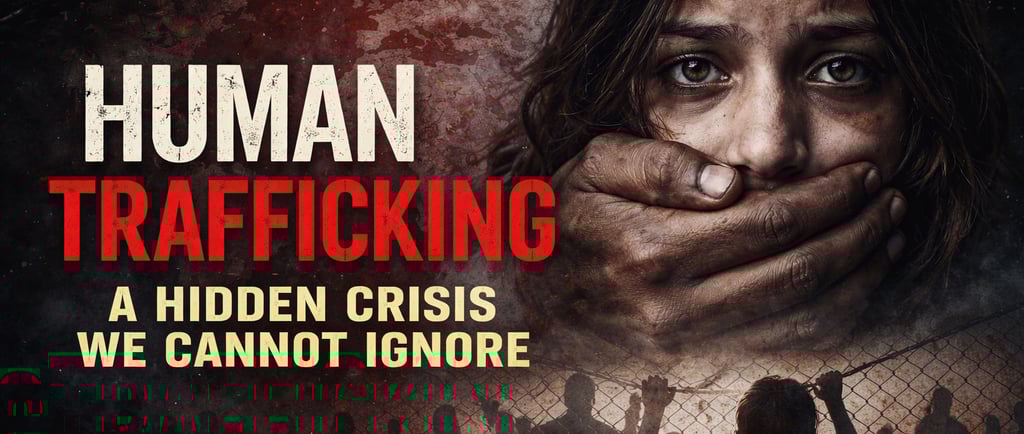
Human Trafficking: A Hidden Crisis We Cannot Ignore
Children of the Kingdom – Tampa Bay
Human trafficking is not a distant issue happening “somewhere else.” It is a global crisis—and a local reality—that affects millions of lives every day. Behind closed doors, in neighborhoods that look just like ours, people are being exploited for profit through force, deception, and control.
The Reality Behind the Numbers
Globally, an estimated 27.6 million people are victims of human trafficking. These numbers are not just statistics—they represent real individuals, families, and stories.
77% of victims are trapped in forced labor
23% are victims of sex trafficking
When we look closer:
57% of victims are men and boys
43% are women and girls
Within sex trafficking:
78% are women and girls
22% are men and boys
92% are adults, but 8% are children
Within forced labor:
67% are men and boys
33% are women and girls
73% are adults, while 27% are children
Even without exact numbers for the United States, one fact is clear: human trafficking has been reported in all 50 states, including right here in Florida.
What Is Human Trafficking?
Human trafficking is not always what people imagine. It doesn’t always involve crossing borders or dramatic kidnappings. In many cases, it happens quietly, through manipulation and control.
There are two primary forms:
Sex trafficking: when a person is exploited for commercial sex through force, fraud, or coercion—or when the person is under 18, regardless of circumstances.
Forced labor: when someone is compelled to work or provide services through threats, deception, or abuse of power.
How Traffickers Operate
There is no single profile of a trafficker. They can be strangers—but often they are not.
They may be:
A romantic partner
A family member or friend
An employer offering a “great opportunity.”
Someone connecting through social media or online games
What they all have in common is this: profit at the expense of another human being.
Traffickers use three main tactics:
Force
Physical violence, threats, and intimidation—not only against victims but also their families.
Fraud
False promises of jobs, education, relationships, or a better life—only to trap victims in exploitation.
Coercion
Psychological control, such as threats of deportation, shame, isolation, debt, addiction, or confiscation of identity documents.
For minors, any commercial sexual exploitation is considered trafficking, even without force or threats.
Where It Happens
Human trafficking is not confined to one place or industry. It can occur in:
Agriculture and construction
Restaurants and hospitality
Cleaning and janitorial services
Domestic work and caregiving
Factories and manufacturing
Hotels, massage parlors, and escort services
Online platforms and social media
It can be hidden in plain sight—in businesses, neighborhoods, and everyday environments.
Who Is at Risk?
Anyone can become a victim. However, certain groups are more vulnerable:
Individuals facing poverty or homelessness
Children in foster care or the juvenile system
Survivors of abuse or domestic violence
Migrants and displaced individuals
People working in low-protection industries
Traffickers target vulnerability—and exploit it.
The Impact on Victims
The consequences of trafficking are devastating and long-lasting.
Physical effects may include injuries, untreated illnesses, and chronic health problems.
Emotional and psychological trauma can lead to anxiety, depression, and post-traumatic stress.
Financial damage often leaves victims in debt, without resources, and struggling to rebuild their lives.
Even after escaping, many face barriers to employment, housing, and education.
Understanding the Difference
Human trafficking is often confused with other issues, but it is distinct:
Human smuggling involves illegal transportation across borders (with consent).
Prostitution may be illegal but does not always involve coercion.
Labor violations involve unfair conditions but not necessarily force or control.
Human trafficking, at its core, is about,exploitation through control.
A Call to Awareness and Action
This is not just a legal issue—it is a human issue. Awareness is one of the most powerful tools we have.
At Children of the Kingdom in Tampa Bay, we believe in restoring dignity, protecting the vulnerable, and standing for those whose voices have been silenced.
You can be part of the solution:
Learn to recognize the signs
Stay informed and share knowledge
Support organizations working with survivors
Speak up when something doesn’t seem right
Human trafficking thrives in silence—but together, we can bring it into the light.